Milligram Capsules
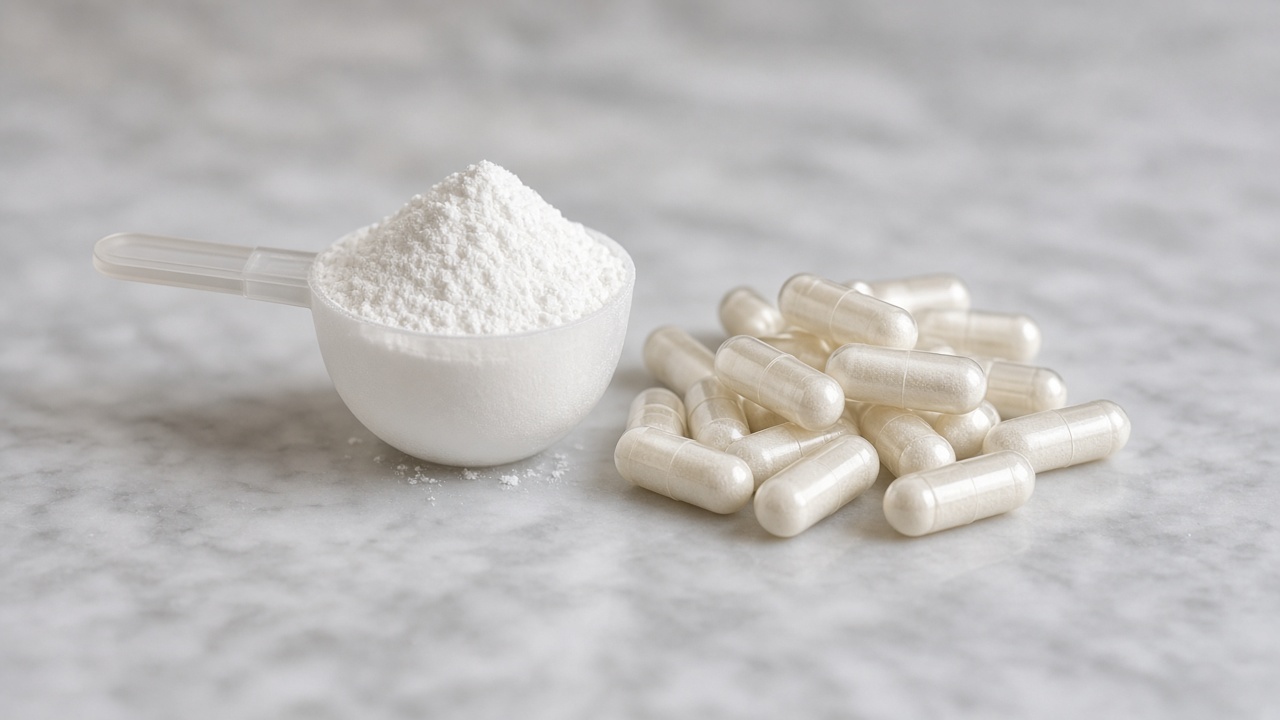
Capsules carry milligrams of about 99% L-ergothioneine from golden oyster. The dose is the isolated amino acid, not a scoop of mushroom powder.
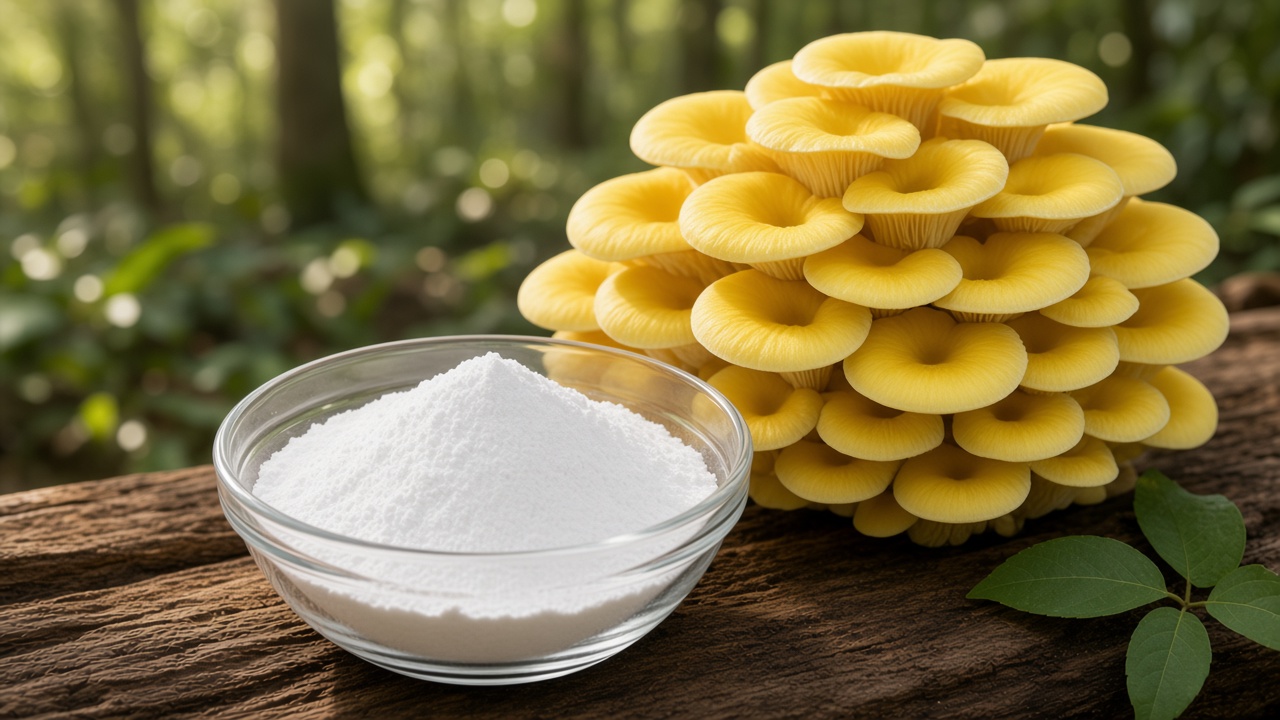
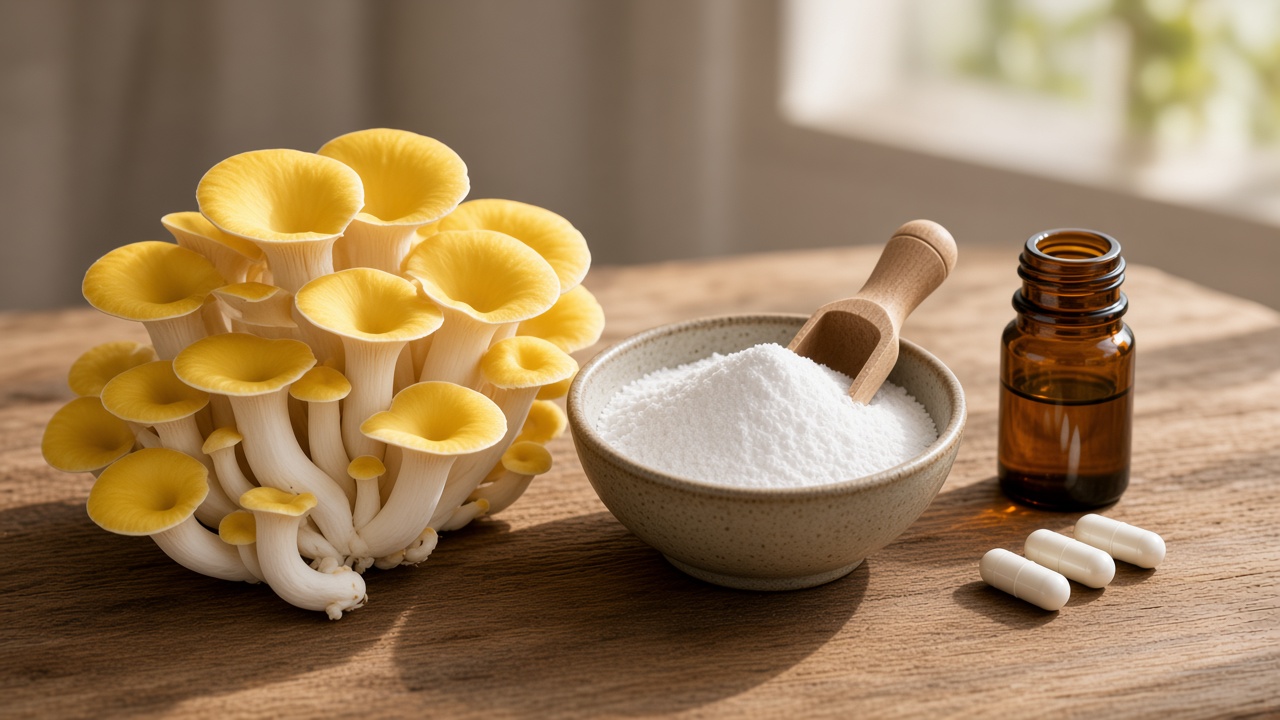
Weigh this one. L-ergothioneine at about 99%, CAS 497-30-3, is an isolated amino acid from golden oyster, Pleurotus citrinopileatus. It is not a scoop of mushroom extract, and it does not belong on a beta-glucan line.
Capsules, tablets and some serum trials use it at milligram doses. HPLC assay, identity, residual solvents and the source organism are the release. A Pleurotus polysaccharide powder cannot keep the 99% claim.
| Mushroom Source | Golden Oyster | Latin Name | Pleurotus citrinopileatus |
|---|---|---|---|
| Appearance | White fine powder | Test Method | HPLC |
| Ergothioneine | 99% | CAS No. | 497-30-3 |
Capsules carry milligrams of about 99% L-ergothioneine from golden oyster. The dose is the isolated amino acid, not a scoop of mushroom powder.
Tablets dilute the same isolate in the tablet mass and still deliver it by the milligram.
Serum trials can take the water-soluble isolate at a low level. Colour and stability belong in that formula test.
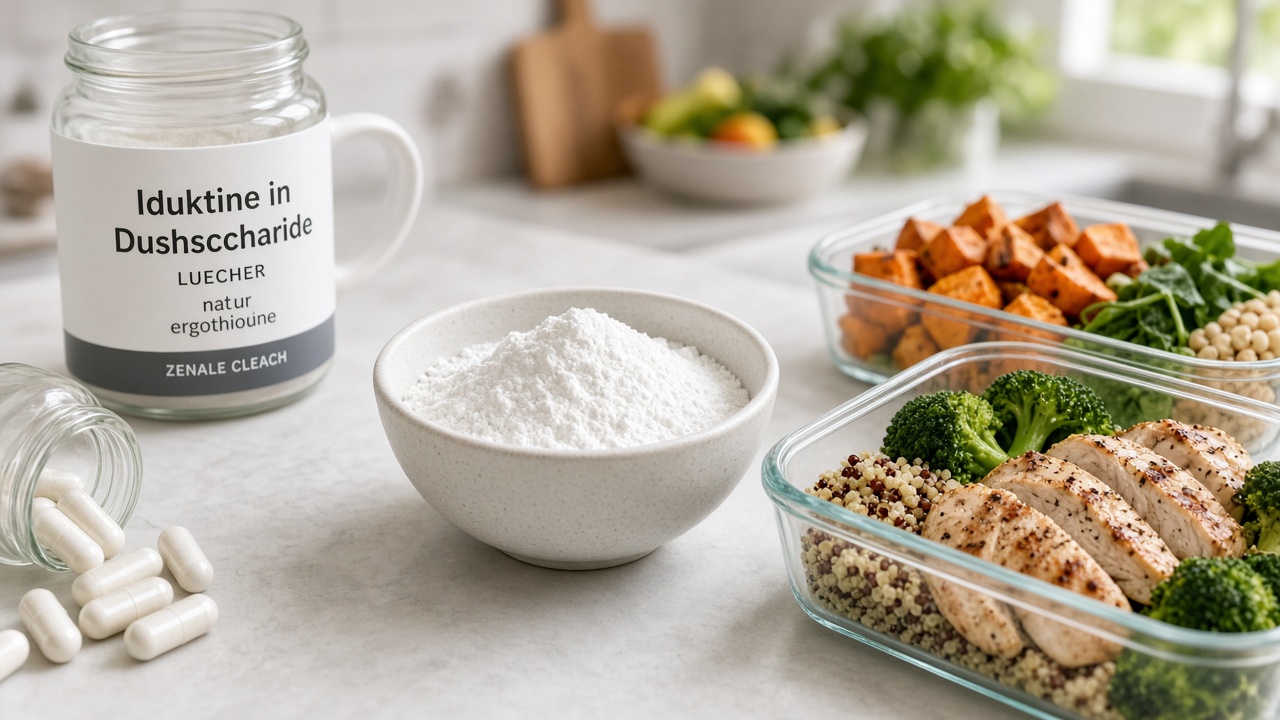
The capsule contains the purified amino acid. An oyster polysaccharide powder cannot keep a 99% ergothioneine claim.