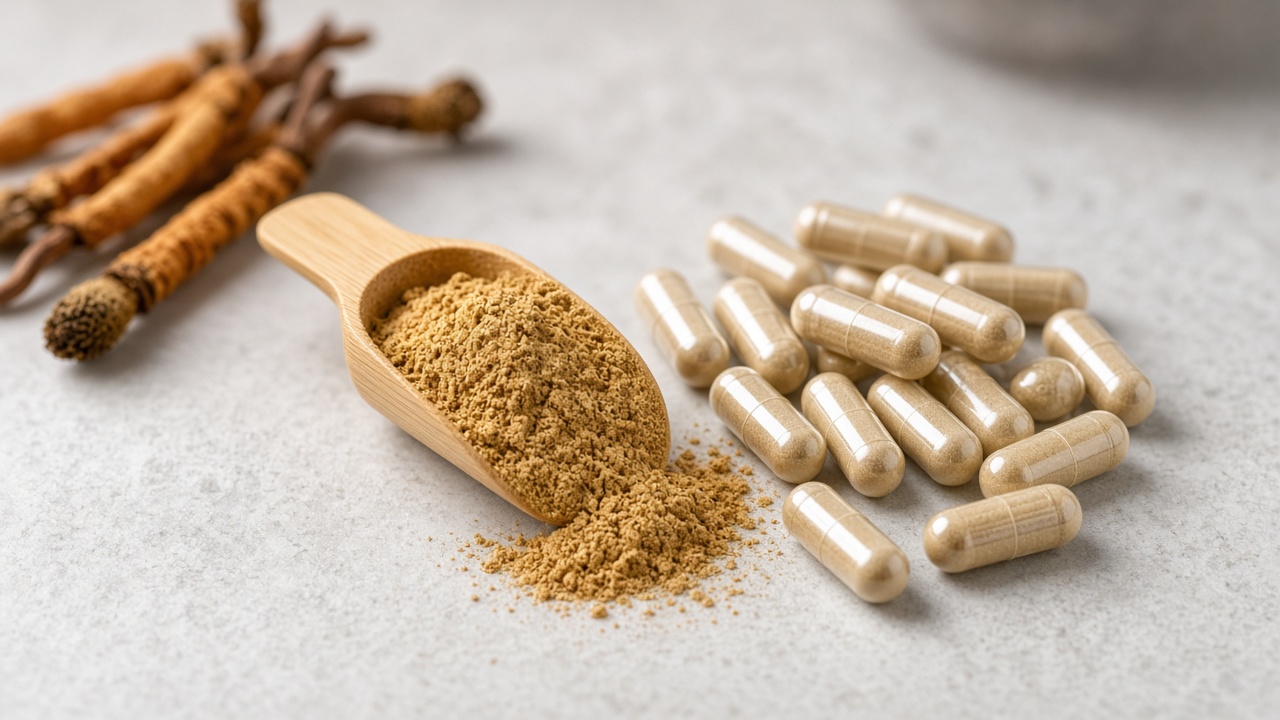
Cordycepin Capsules
Capsules deliver cordycepin from cultivated Cordyceps militaris fruiting bodies, measured as that molecule.
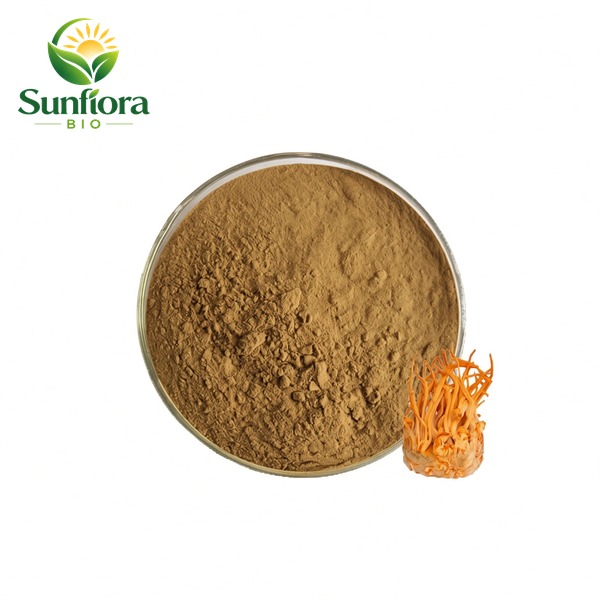
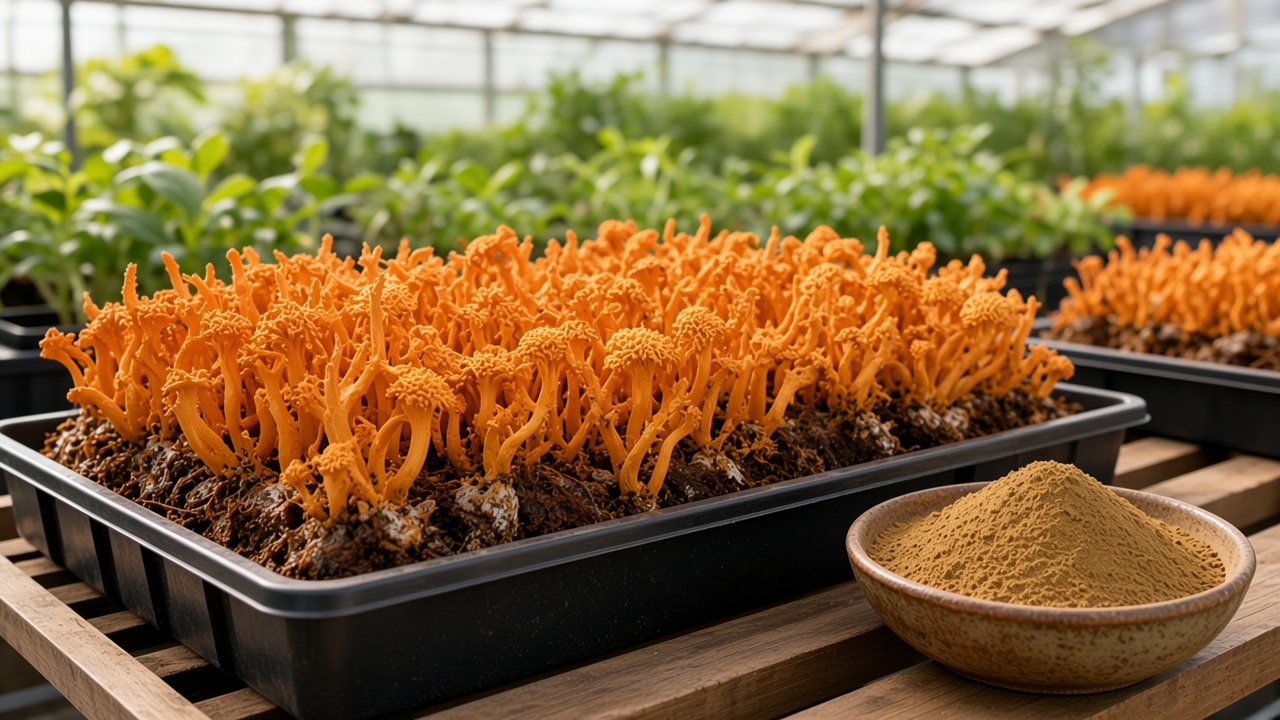
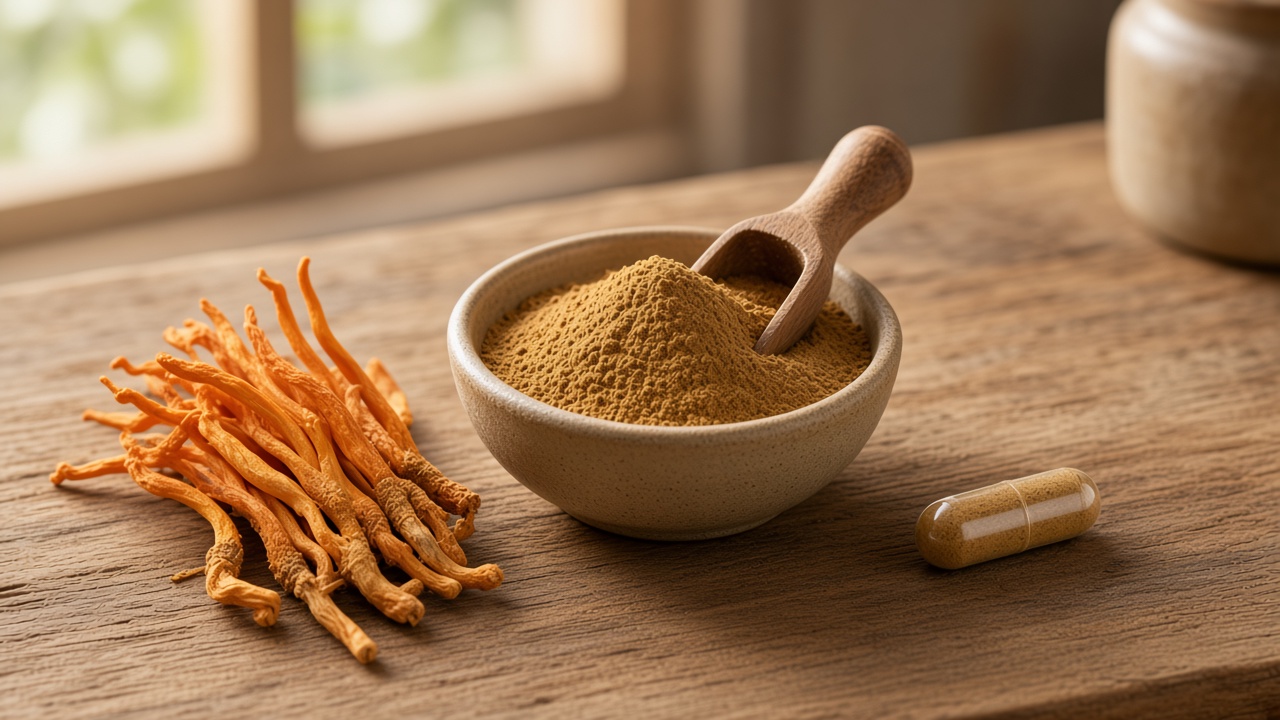
The orange clubs in a cultivation tray are Cordyceps militaris. They are not the caterpillar fungus, and they must not be labelled Ophiocordyceps sinensis.
Cordycepin is what separates this fruiting body from a generic polysaccharide powder. Grades run from about 0.1% to 5%, and that figure is an HPLC result, not something a polysaccharide percent implies. Beta-glucan can sit beside it. If the label states cordycepin, the purchase order has to state it too.
| Mushroom Source | Cordyceps | Latin Name | Cordyceps militaris |
|---|---|---|---|
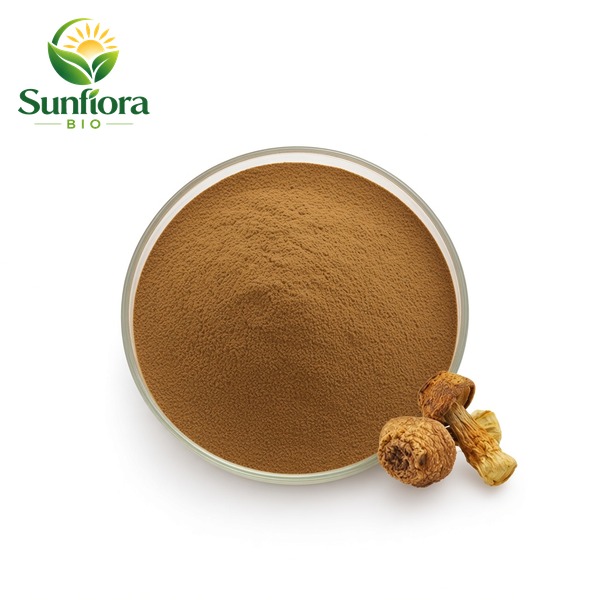
| Part Used | Fruiting body | Appearance | Brown-yellow powder |
| Polysaccharides % | 10%–50% | Beta-Glucan % | 10%–50% |
| Test Method | UV | MOQ | 1 kg |
| Cordycepin | 0.1%–5% |
Capsules deliver cordycepin from cultivated Cordyceps militaris fruiting bodies, measured as that molecule.
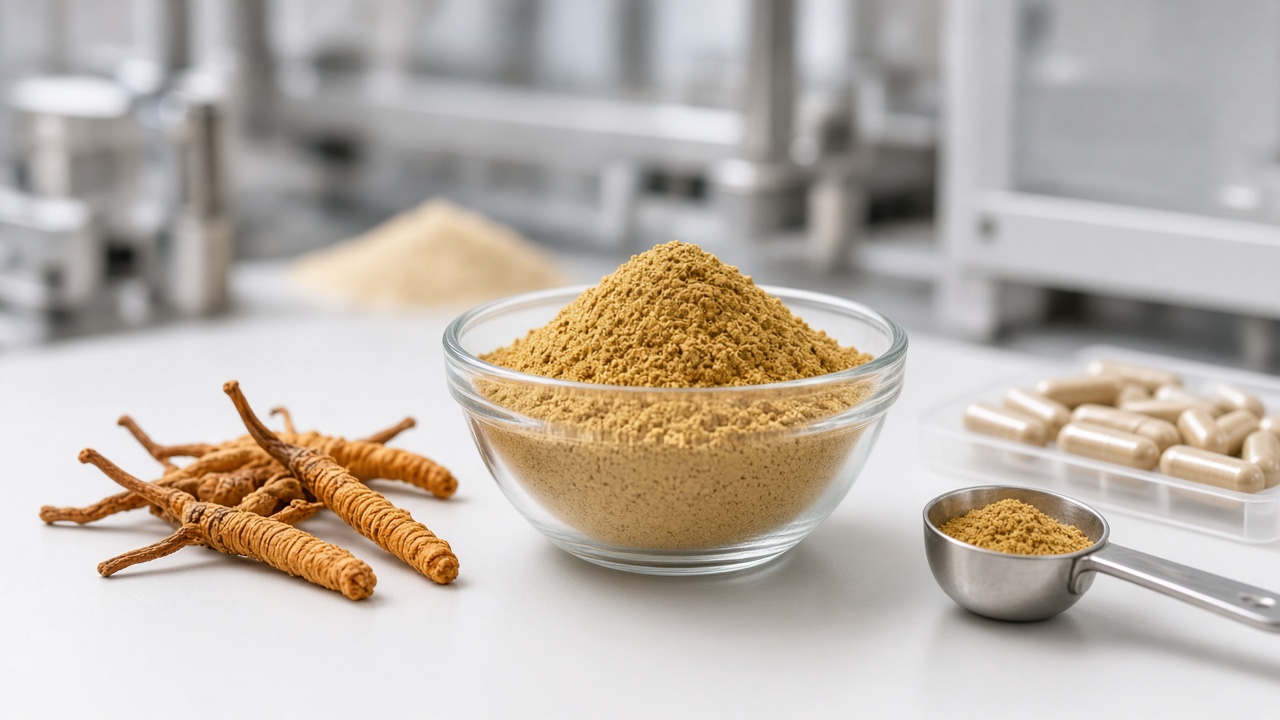
Energy blends combine it with other mushrooms, and the cordycepin in the formula comes from this extract.
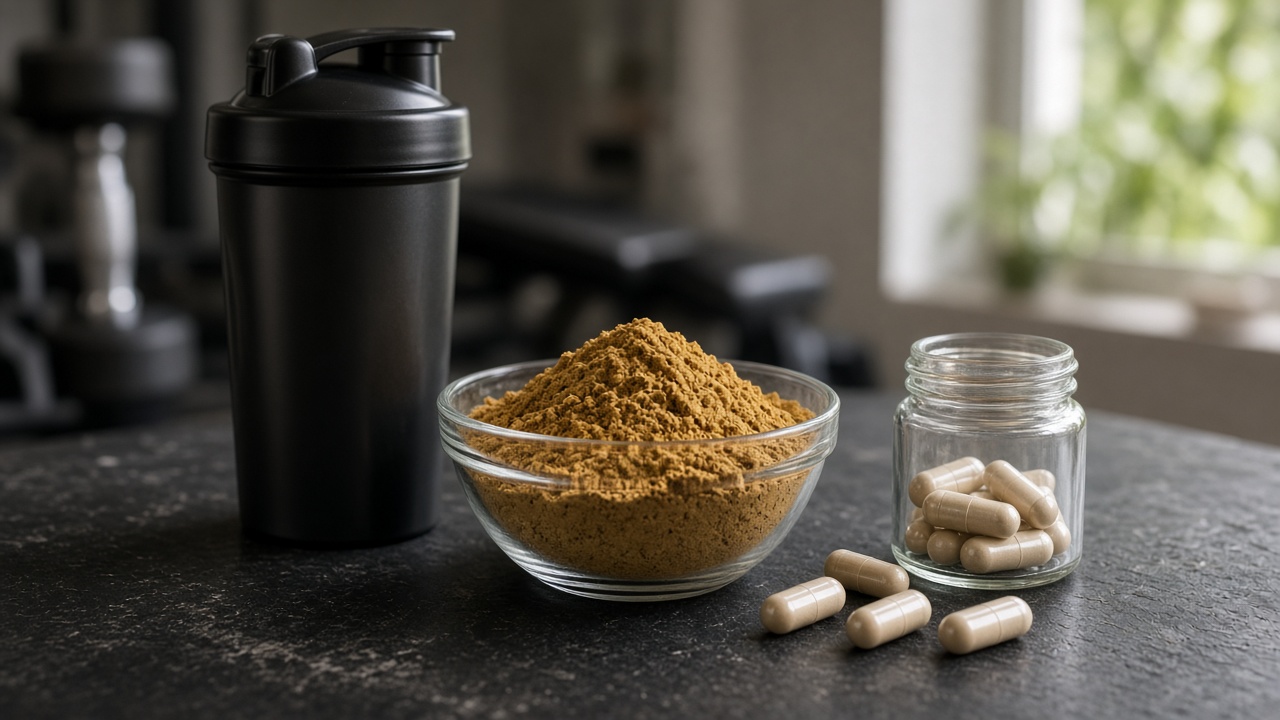
Performance formulas use the cordycepin dose. The assay itself does not create a sports claim.
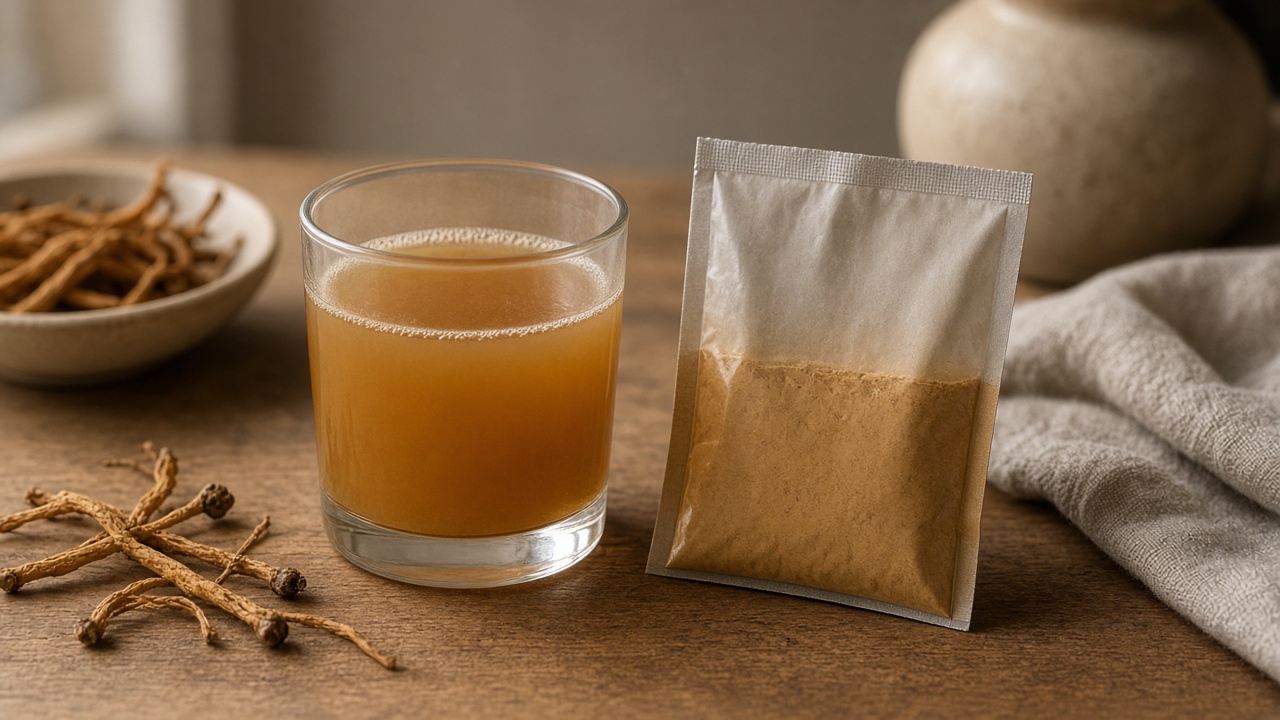
Drinks take a brown-yellow colour. Cordycepin has to survive the heat and pH of that drink.
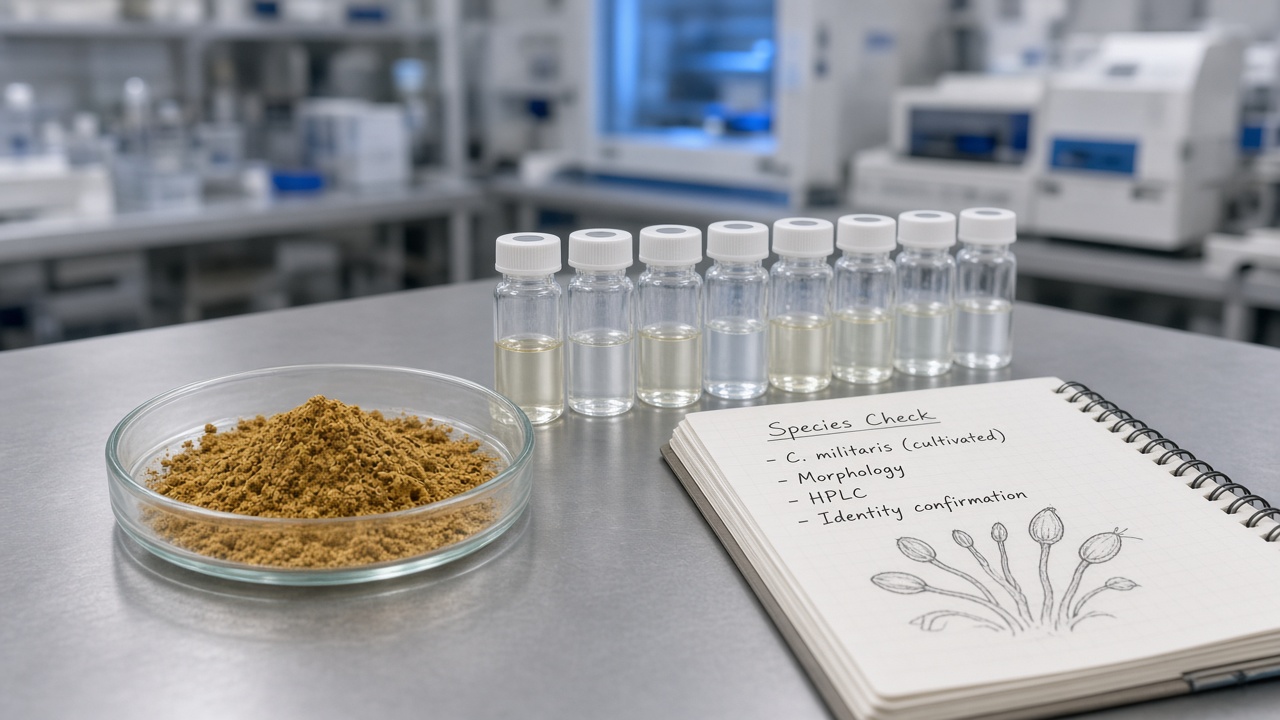
Cultivated militaris is the organism in the capsule. Caterpillar fungus, Ophiocordyceps sinensis, is a different species.
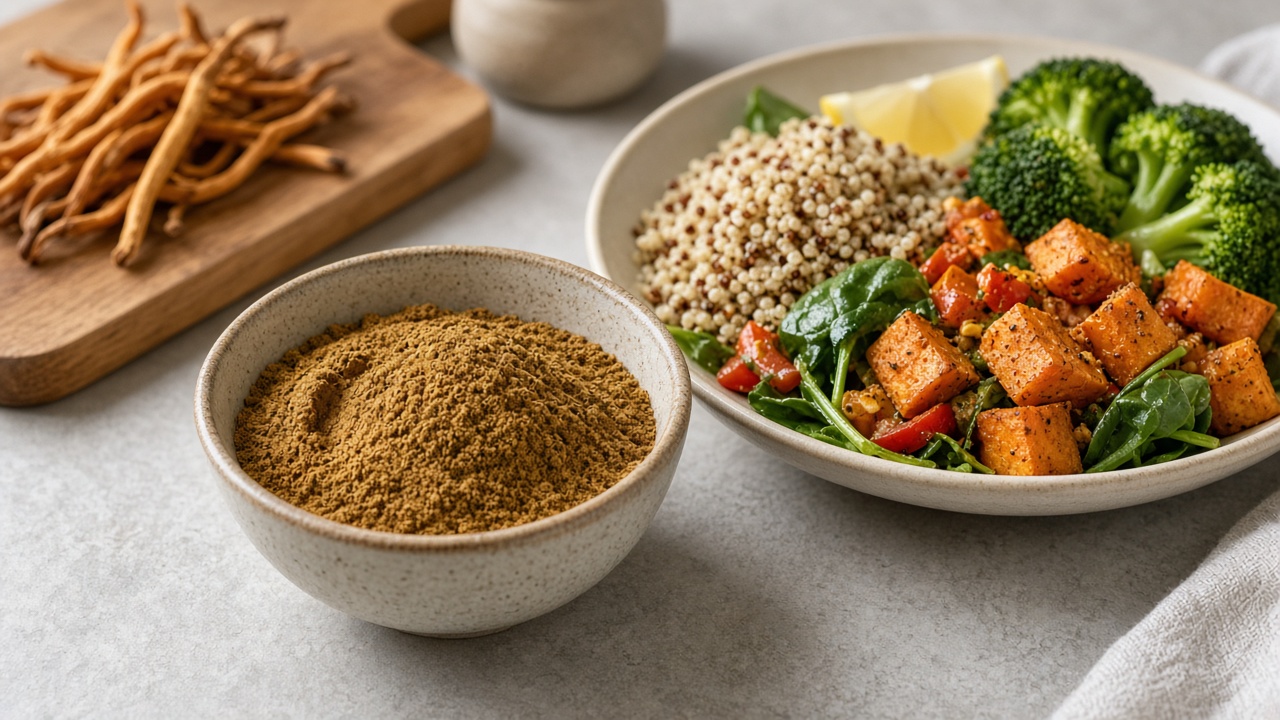
The orange clubs from cultivation are the raw material. Wild caterpillar fungus is another ingredient and another price.