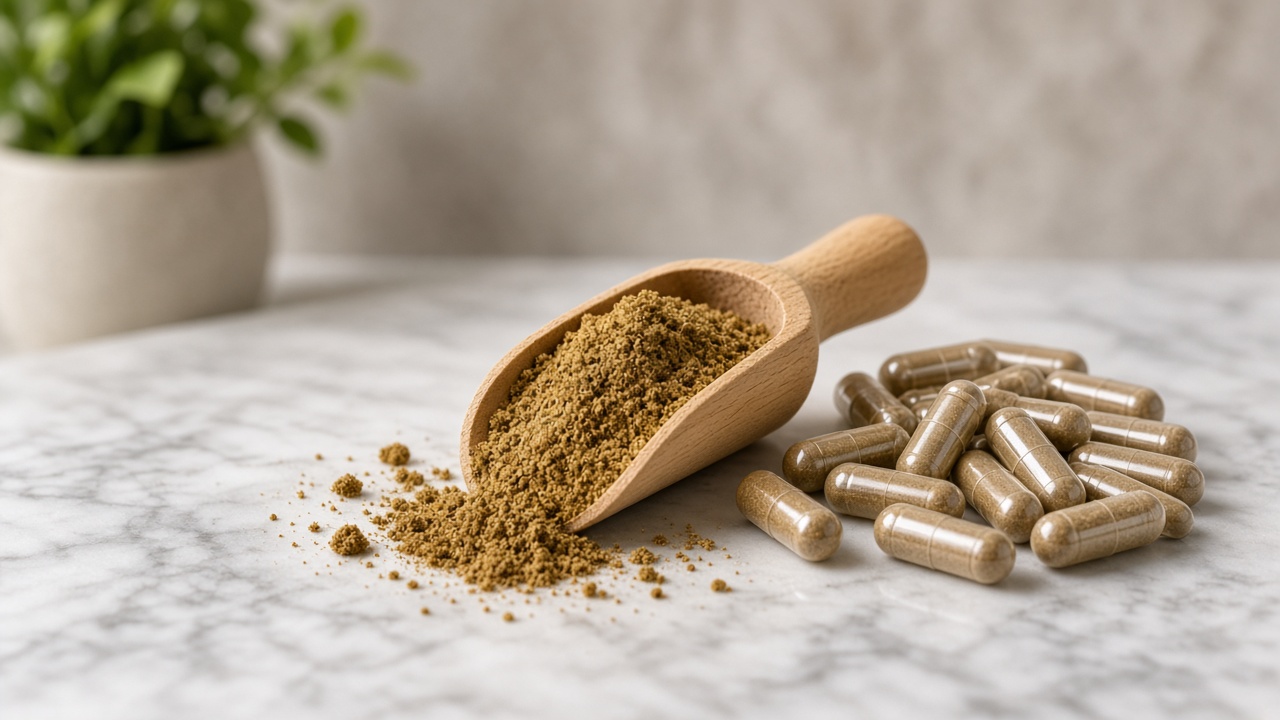
DNJ Capsules
1%, 5% and 10% are different fills for the same DNJ milligrams.
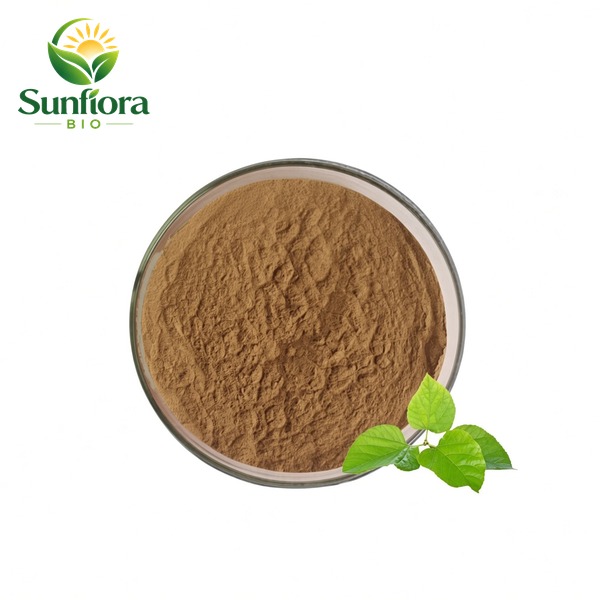
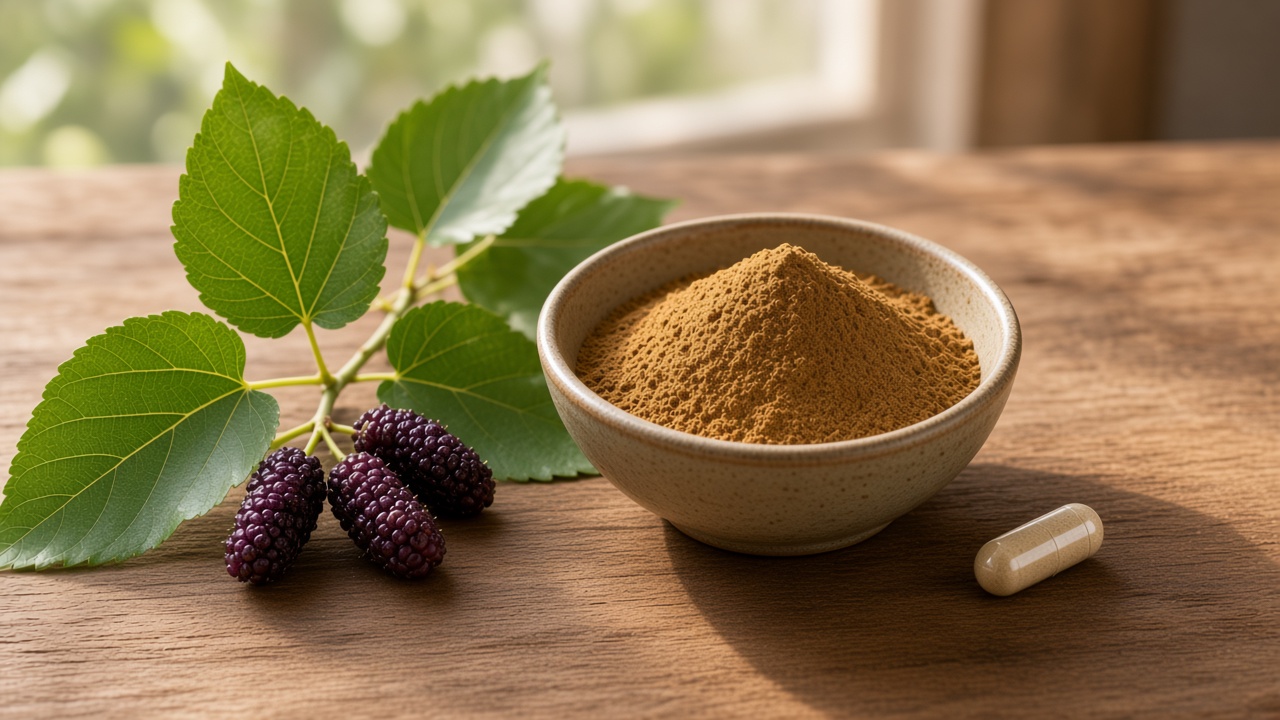
Mulberry leaf extract is standardized to 1-deoxynojirimycin (DNJ), commonly 1%, 5% or 10%. DNJ is an iminosugar, not a polyphenol, and it is the marker tied to carbohydrate-enzyme research.
The leaf is used in glucose-style capsules and teas. A green leaf powder without a DNJ assay is a food ingredient, not this spec.
When buying, write DNJ by HPLC. Total flavonoids will not answer the question.
| Product Name | Mulberry Leaf Extract Powder | Botanical Name | Morus species leaf |
|---|---|---|---|
| Specification | 1%, 5%, 10% DNJ | Appearance | Brown Yellow Powder |
| Test Method | HPLC | MOQ | 1kg |
| Active Ingredient | 1-Deoxynojirimycin (DNJ) | Shelf Life | 2 years |
| Botanical source | Morus species leaf | Active marker | 1-Deoxynojirimycin (DNJ) |
| Grade | Food grade | CAS number | 19130-96-2 |
| COA | Available | Certificate | ISO 22000, FDA, BRC, IFS, SGS, Kosher, Halal, Organic (EU), USDA, HACCP, ISO 9001 |
| Quality | Non-GMO, Non-irradiation, Allergen Free, BSE/TSE Free | Sample | 10-50 g sample for evaluation |
| OEM Service | Private labeling, customized packaging, capsules and tablets | Packaging | 1-5 kg / 25 kg (aluminum foil bag / fiber drum) |
1%, 5% and 10% are different fills for the same DNJ milligrams.
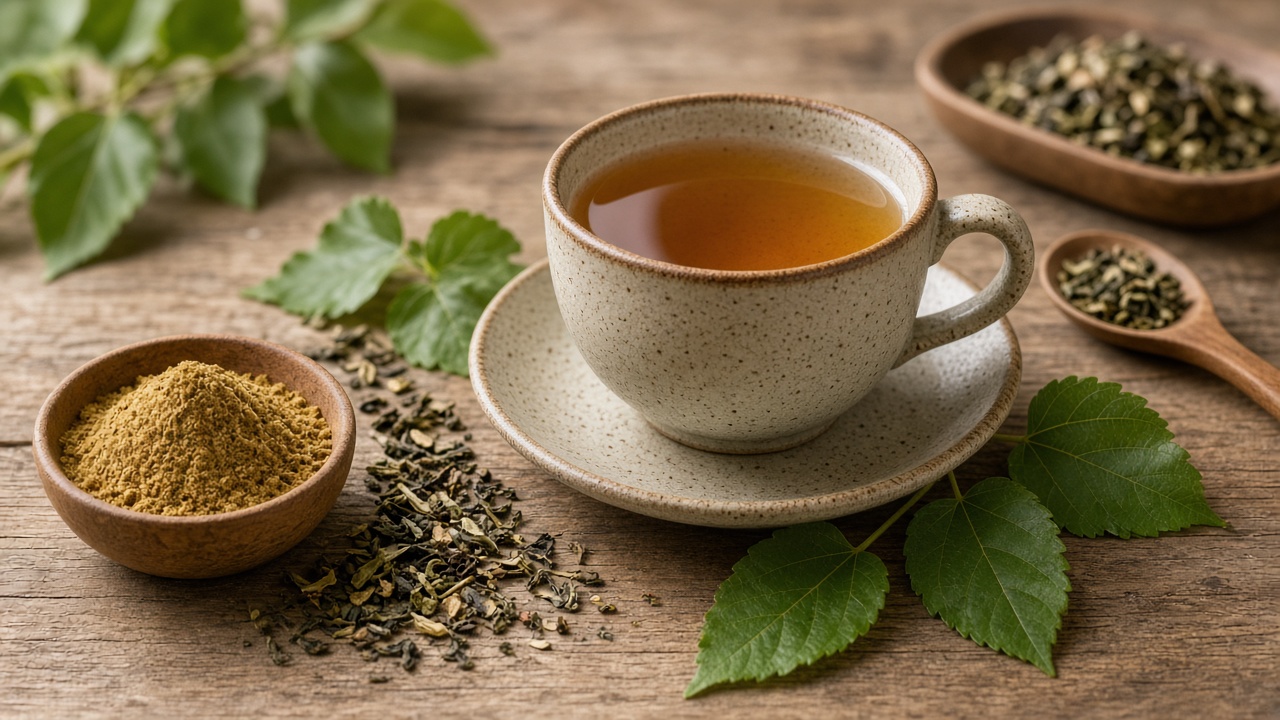
Only if the label does not promise a DNJ percent the tea cannot hold.
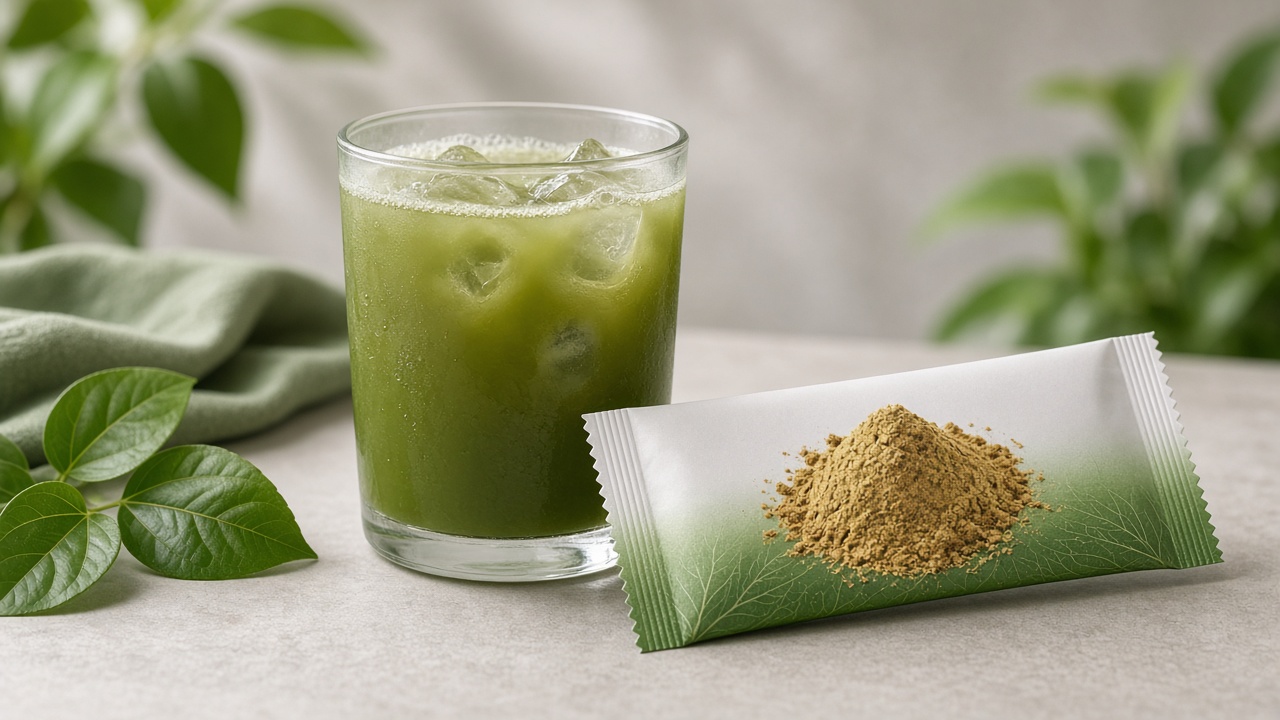
Colour is green. Taste the real dose.
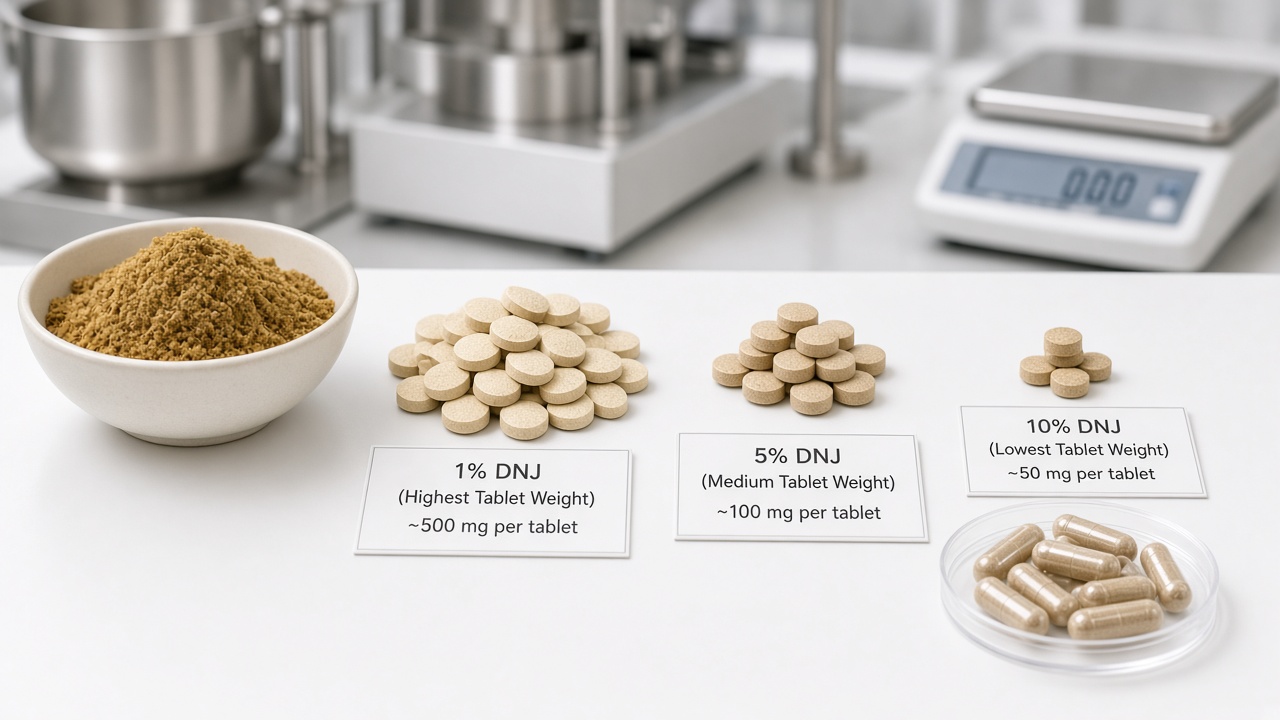
1%, 5% and 10% DNJ change the tablet weight for the same DNJ milligrams.
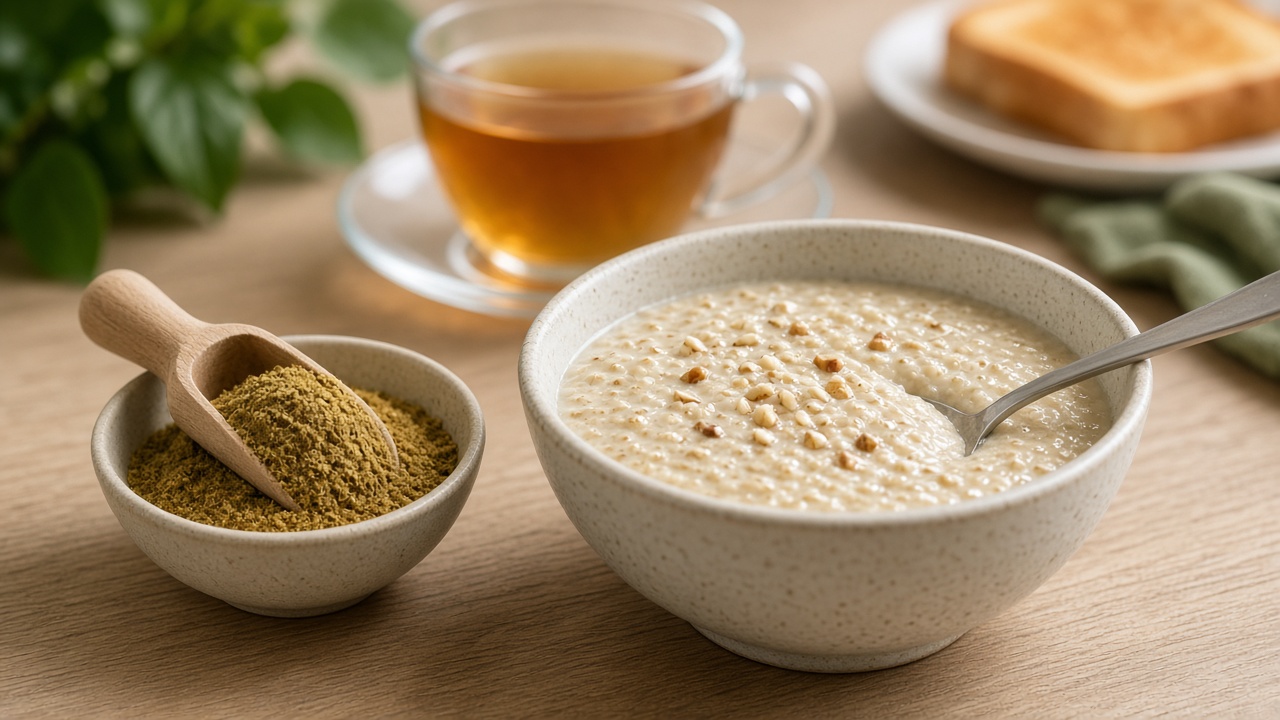
Used in teas and some fortified foods. A leaf powder without a DNJ assay is a different ingredient.
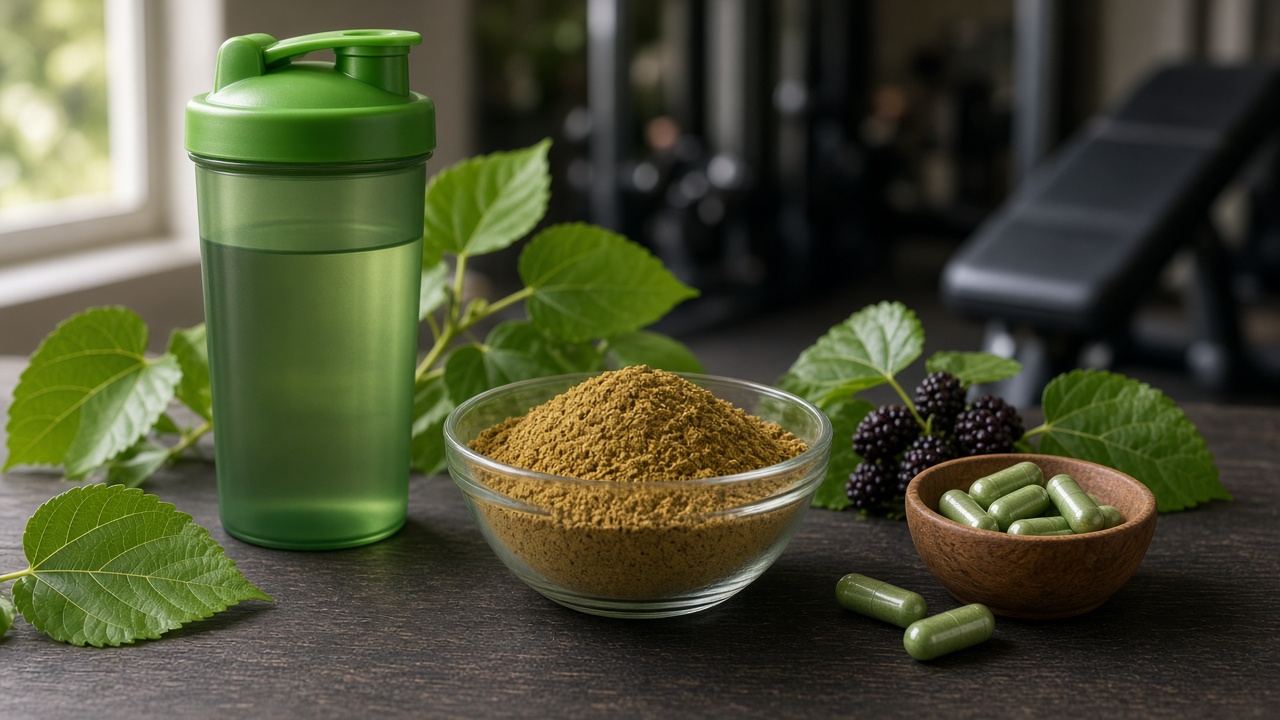
Green colour carries into the blend. Taste the real inclusion.
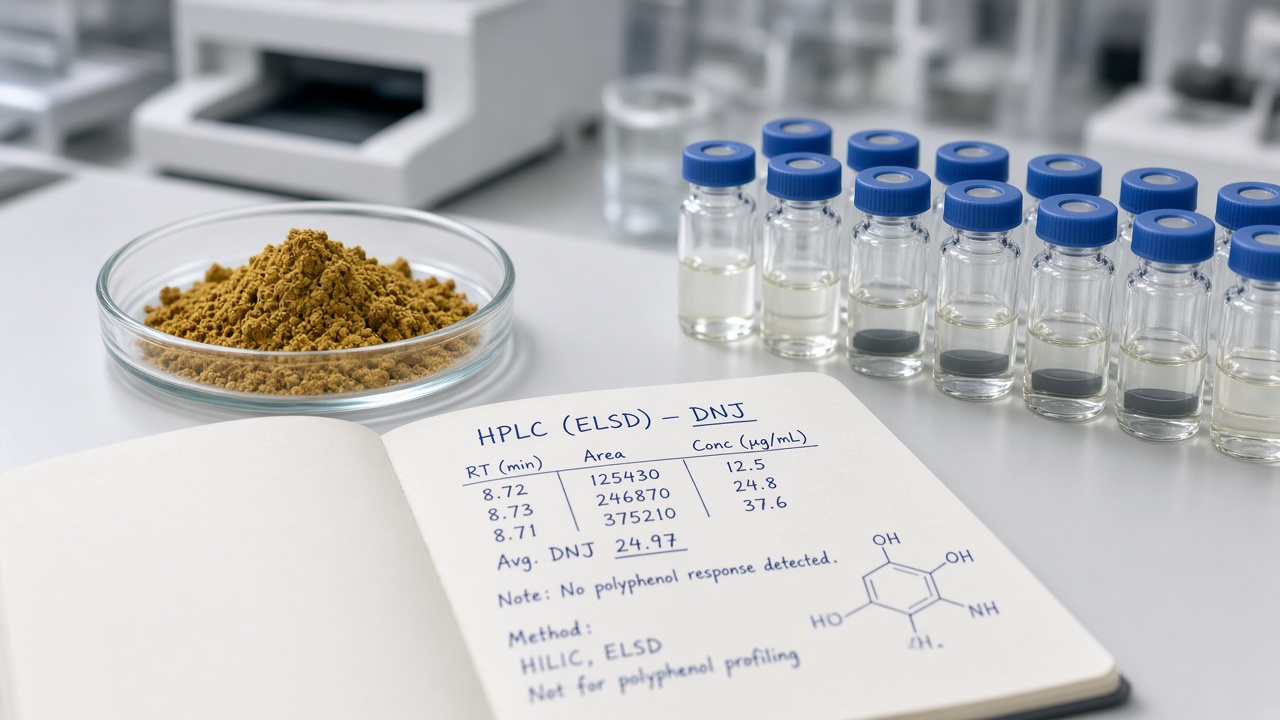
DNJ is an iminosugar. A flavonoid total will not report it.