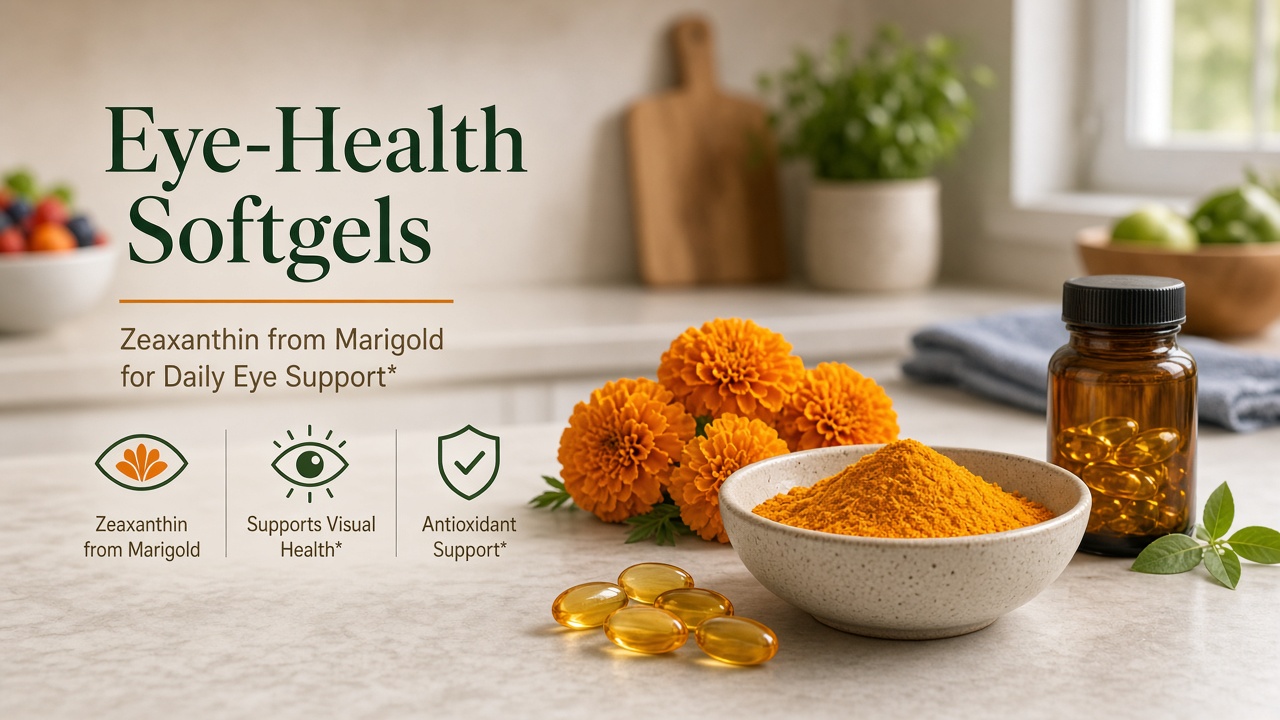
Eye-Health Softgels
Usually paired with lutein. The two assays are separate lines on the label.
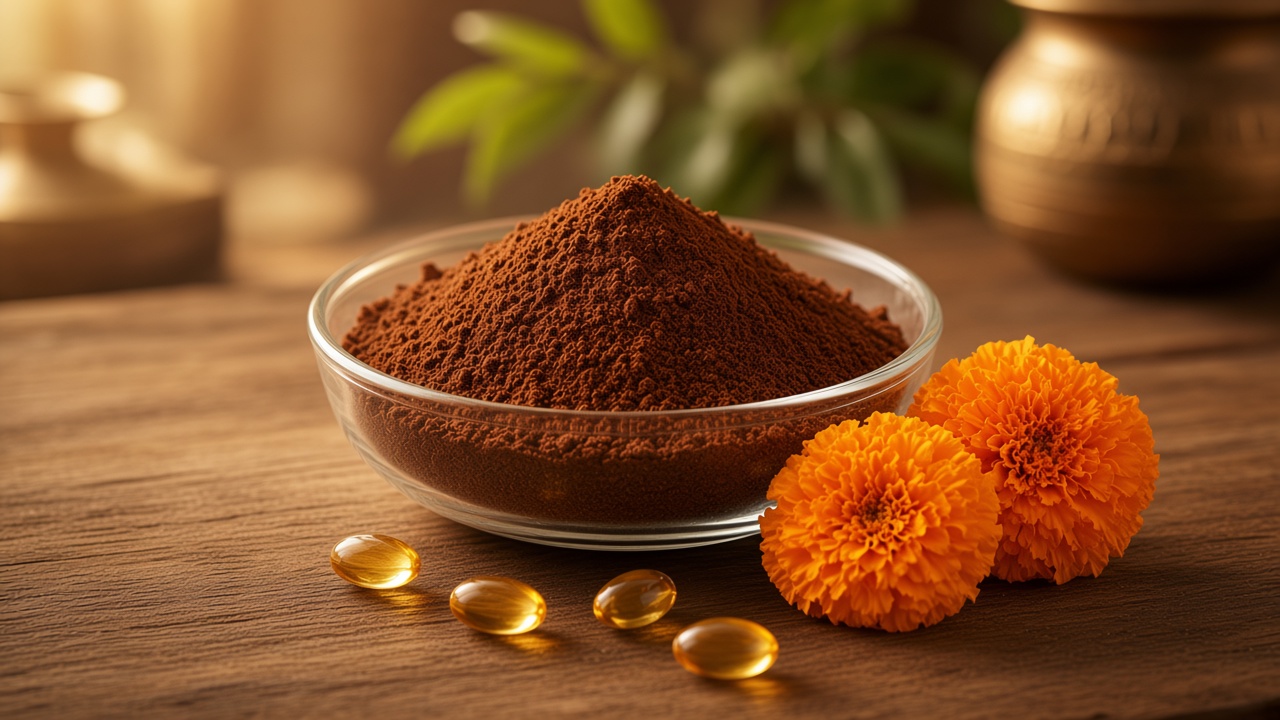
Zeaxanthin from marigold flower is a yellow carotenoid, typically 5–60%, used for macular pigment beside lutein. It is not lutein, and the eye-health dose is a few milligrams, not a colour loading.
Powders are beadlets on a carrier; oils go into softgels. The isomer (3R,3'R) is the one named in eye formulas.
When buying, separate this code from the lutein code, and state beadlet or oil.
| Product Name | Marigold Extract Zeaxanthin Powder | Botanical Name | Marigold flower (Tagetes erecta) |
|---|---|---|---|
| Part Used | Flower | Specification | 5%-60% zeaxanthin |
| Appearance | Dark orange brown to orange fine powder | Test Method | HPLC |
| MOQ | 1kg | Active Ingredient | Zeaxanthin |
| Shelf Life | 2 years | Botanical source | Marigold flower (Tagetes erecta) |
| COA | Available | Certificate | ISO 22000, FDA, BRC, IFS, SGS, Kosher, Halal, Organic (EU), USDA, HACCP, ISO 9001 |
| Quality | Non-GMO, Non-irradiation, Allergen Free, BSE/TSE Free | Sample | 10-50 g sample for evaluation |
| OEM Service | Private labeling, customized packaging, capsules and tablets | Packaging | 1-5 kg / 25 kg (aluminum foil bag / fiber drum) |
Usually paired with lutein. The two assays are separate lines on the label.
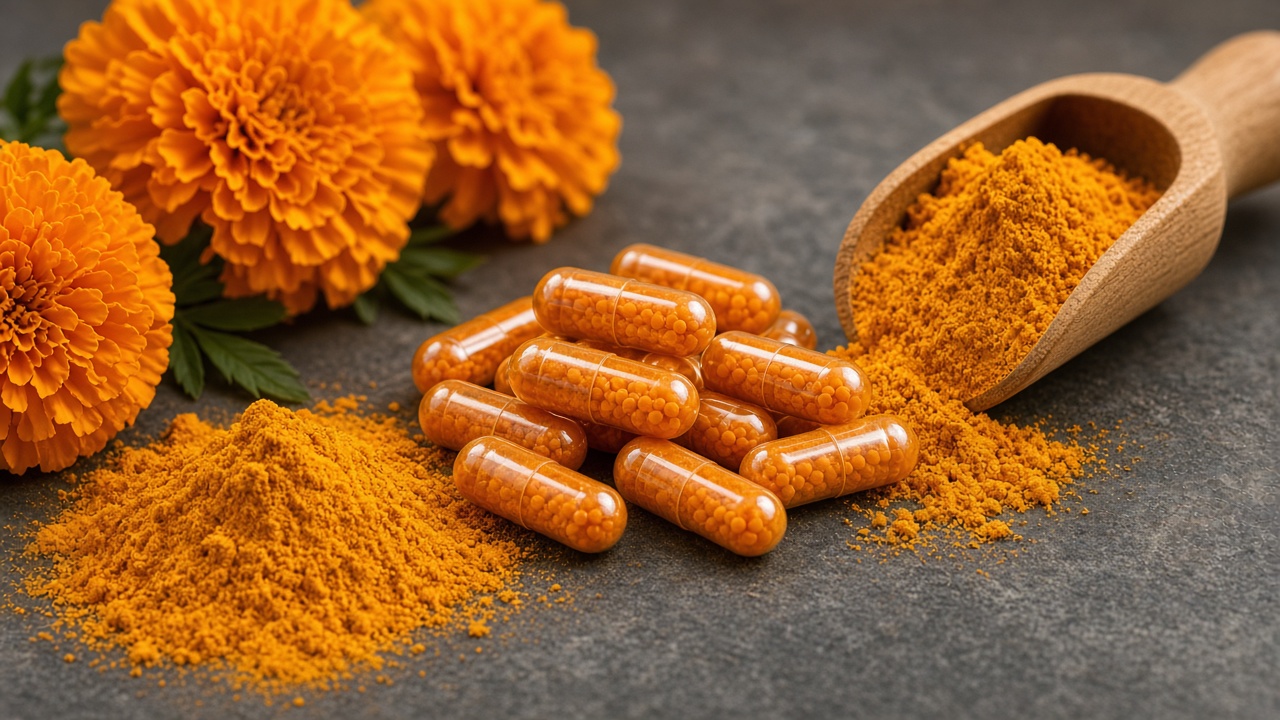
5–60% changes how much carrier you swallow for the same milligrams.
It is a pigment, but an eye-grade spec is not automatically a food-colour approval.
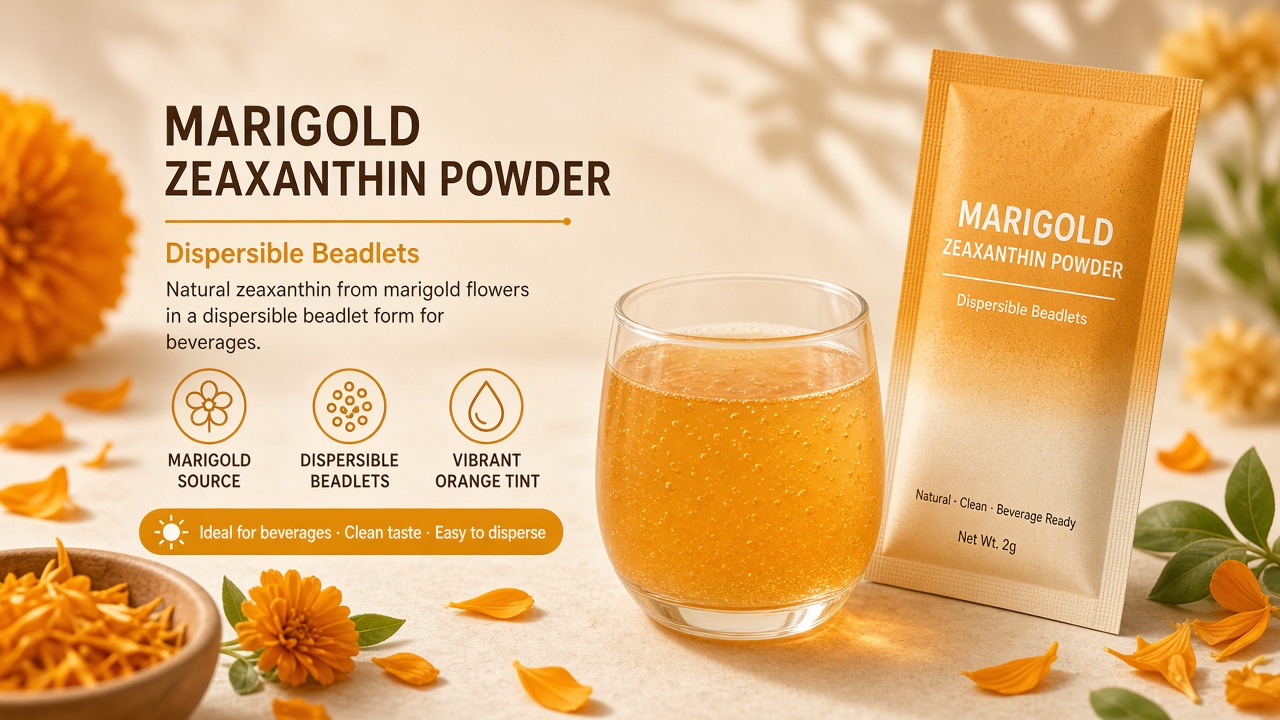
Oil will ring a bottle. Drinks need the beadlet form.
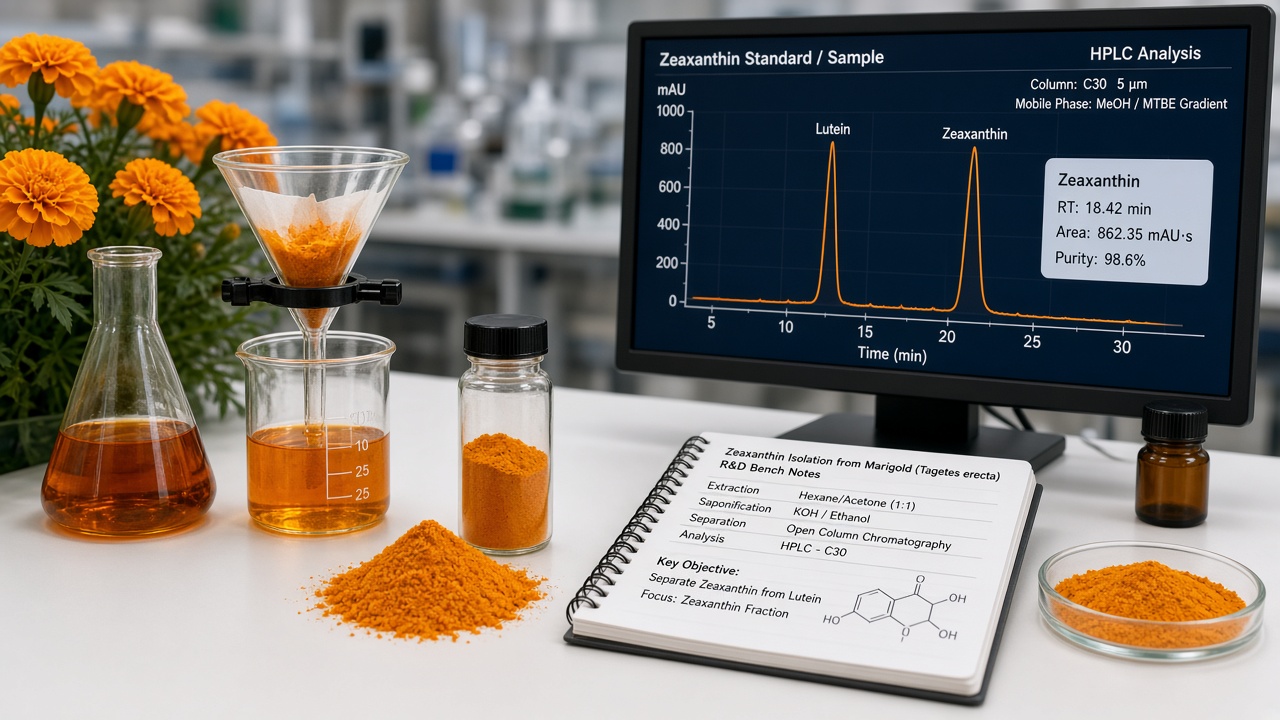
The two carotenoids are different lines, even when they ship from the same flower.