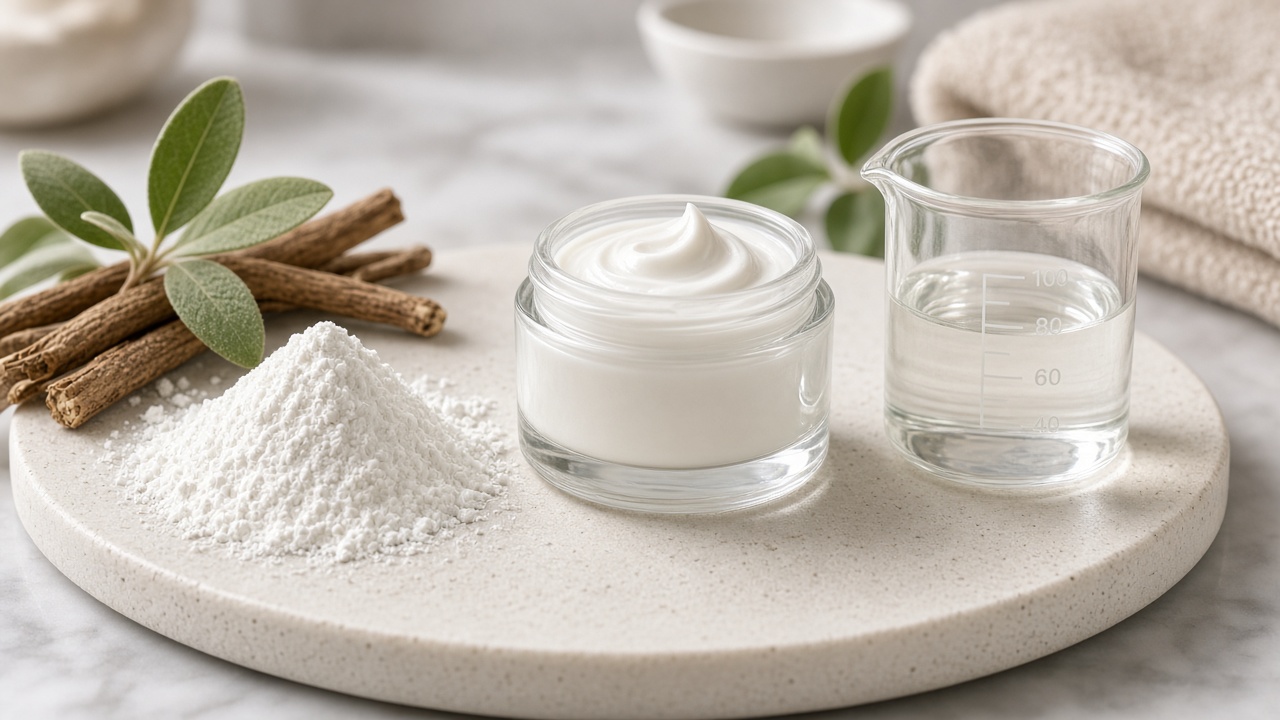
Brightening Creams
The usual use. 40% and 98% change colour and dose.
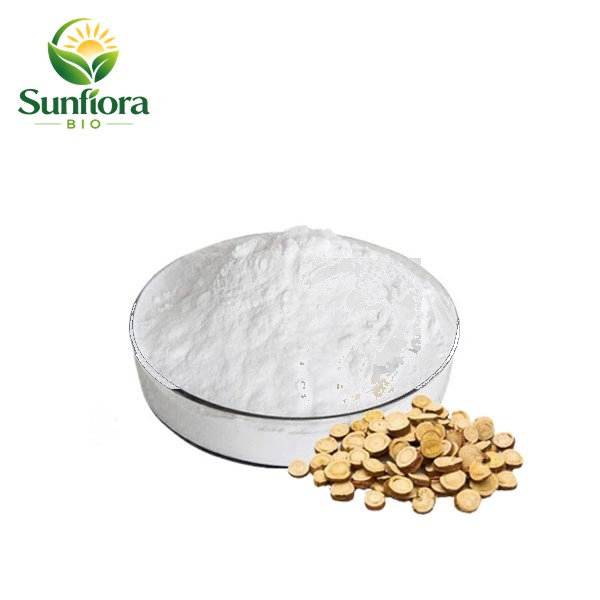
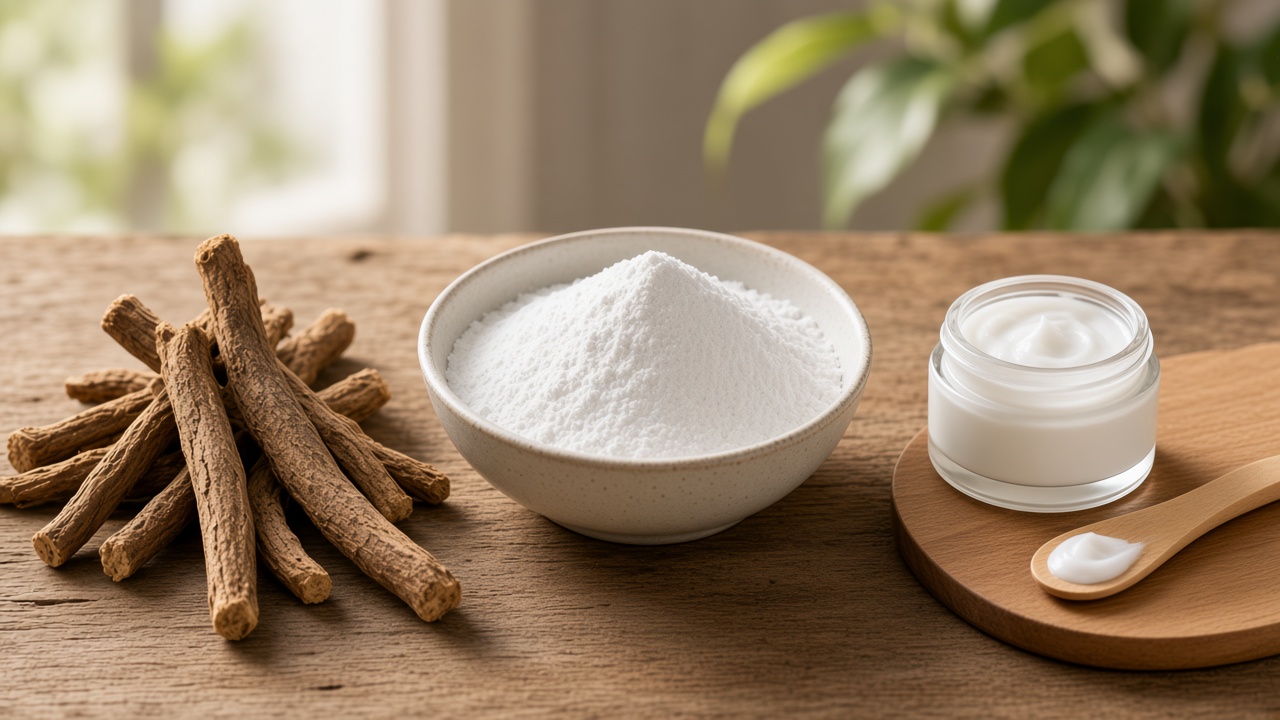
Glabridin is a flavonoid from licorice root, sold at about 40% or 98%. It is the marker used in skin-brightening formulas, not the sweet-tasting glycyrrhizic acid.
Oil-soluble grades go into creams and serums. A 98% powder is a small active dose; a 40% grade needs more mass and brings more colour.
When buying, set the percent, confirm oil solubility, and do not accept a glycyrrhizic COA.
| Product Name | Licorice Root Extract Glabridin Powder | Botanical Name | Glycyrrhiza glabra |
|---|---|---|---|
| Part Used | Root | Specification | 40%, 98% |
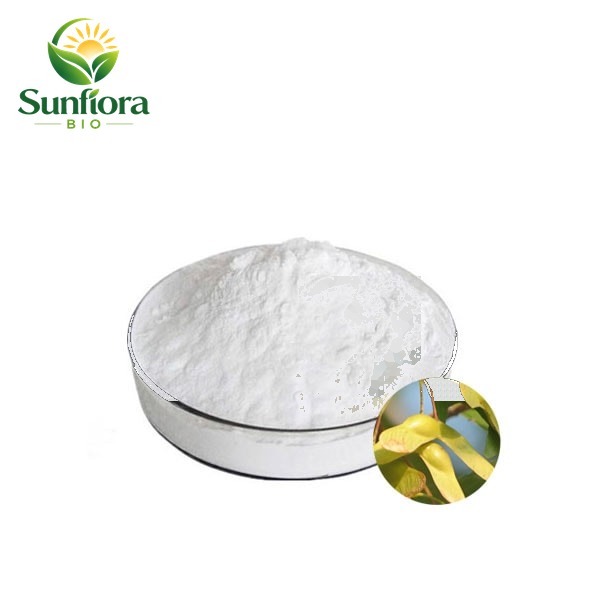
| Appearance | White Powder | Test Method | HPLC |
| MOQ | 1kg | Active Ingredient | Glabridin Powder |
| Shelf Life | 2 years | Packaging | 1-5 kg bags or 25 kg carton/drum |
| COA | Available | Certificate | ISO 22000, FDA, BRC, IFS, SGS, Kosher, Halal, Organic (EU), USDA, HACCP, ISO 9001 |
| Quality | Non-GMO, Non-irradiation, Allergen Free, BSE/TSE Free | Sample | 10-50 g sample for evaluation |
| OEM Service | Private labeling, customized packaging, capsules and tablets |
The usual use. 40% and 98% change colour and dose.
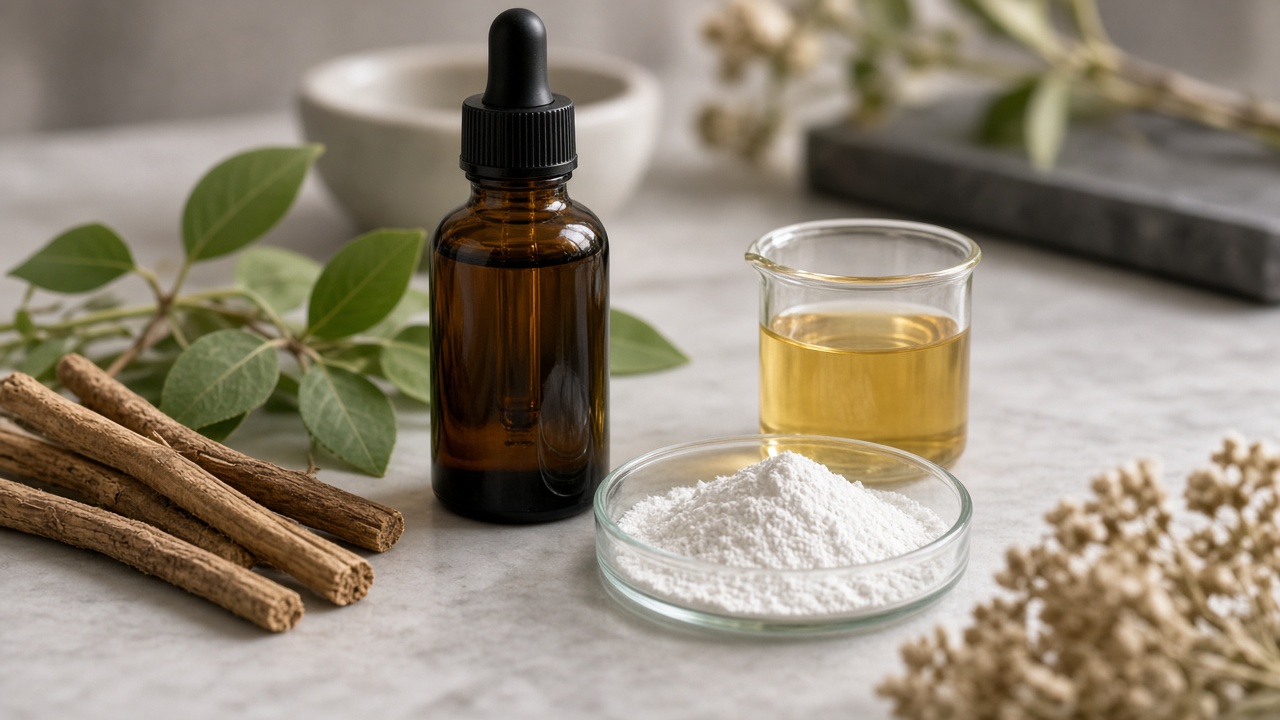
Glabridin prefers oil. Do not drop it into a water phase and expect it to dissolve.
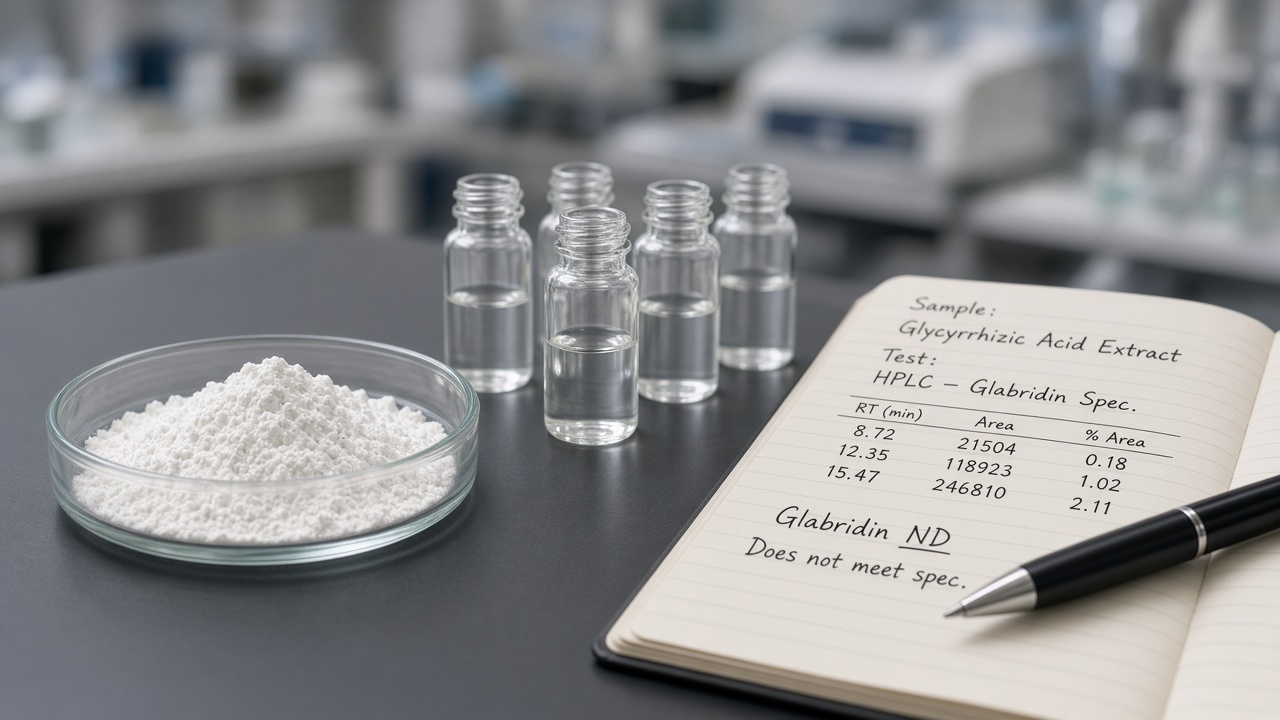
Glycyrrhizic acid will not meet a glabridin HPLC spec.
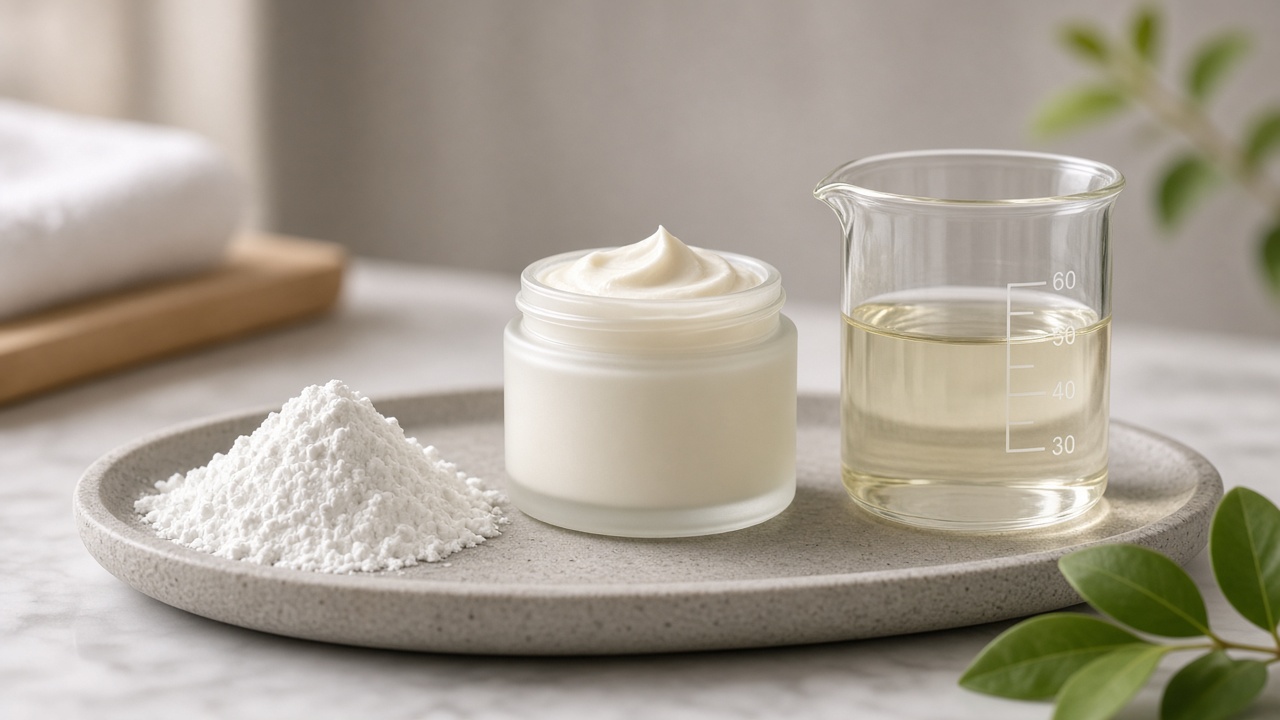
Keep it in the oil phase. 98% needs less mass and shows less colour than 40%.
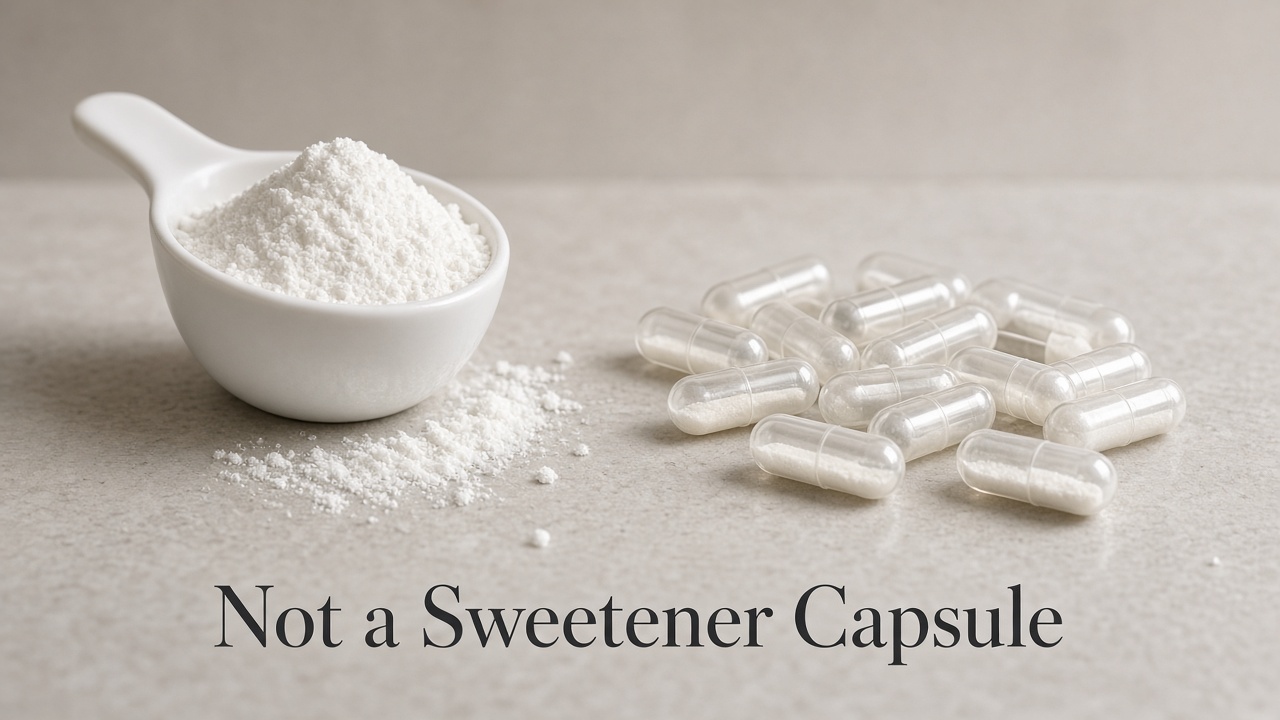
Oral sweetening briefs want glycyrrhizic acid, not glabridin.